


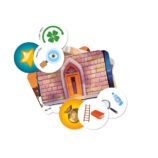
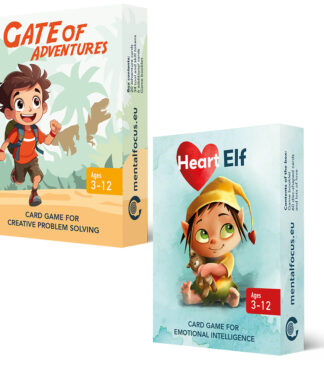
Gate of Adventures & Heart Elf Bundle
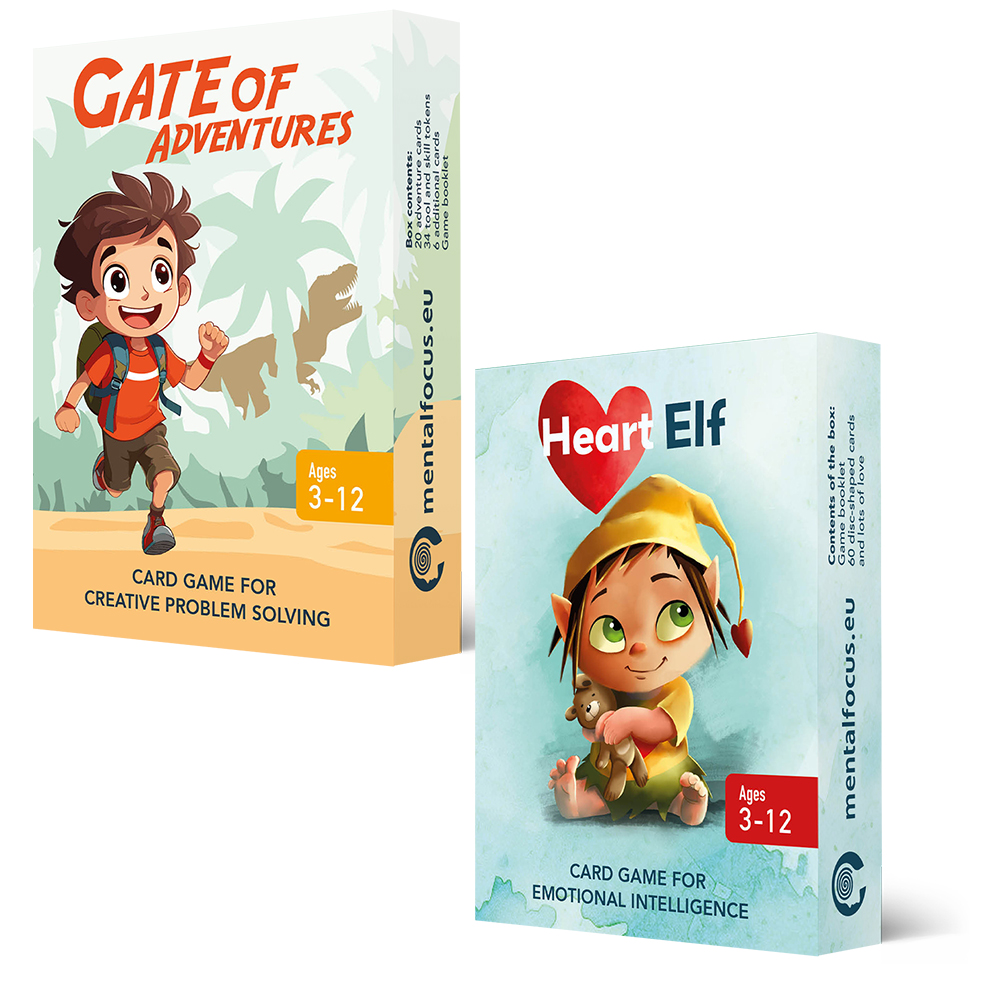
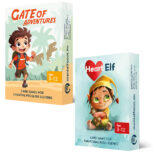
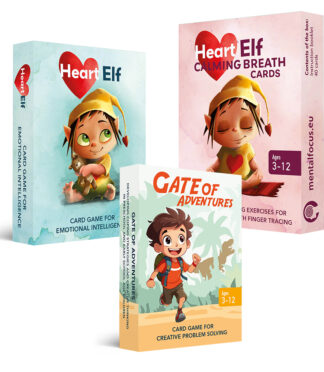
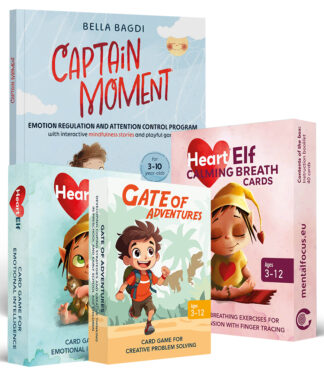
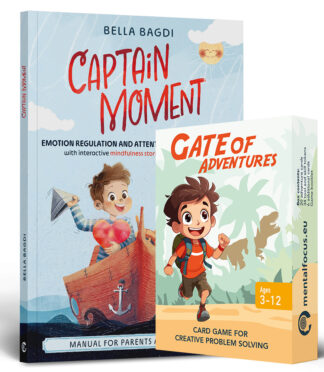
Heart Elf Card Game and Gate of Adventures Card Game — all in one bundle.
- Estimated Delivery: Up to 4 business days
- Free Shipping: On all orders over €65
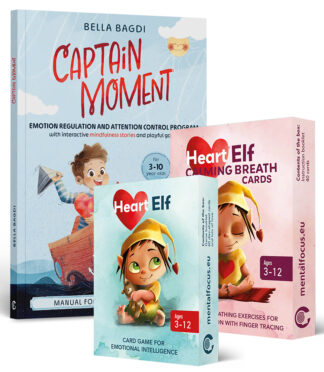
Package contents:
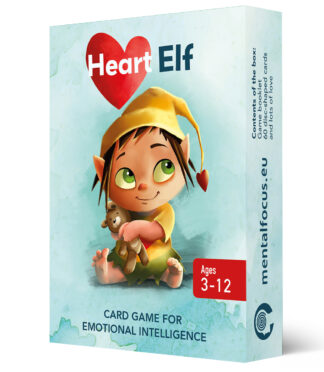
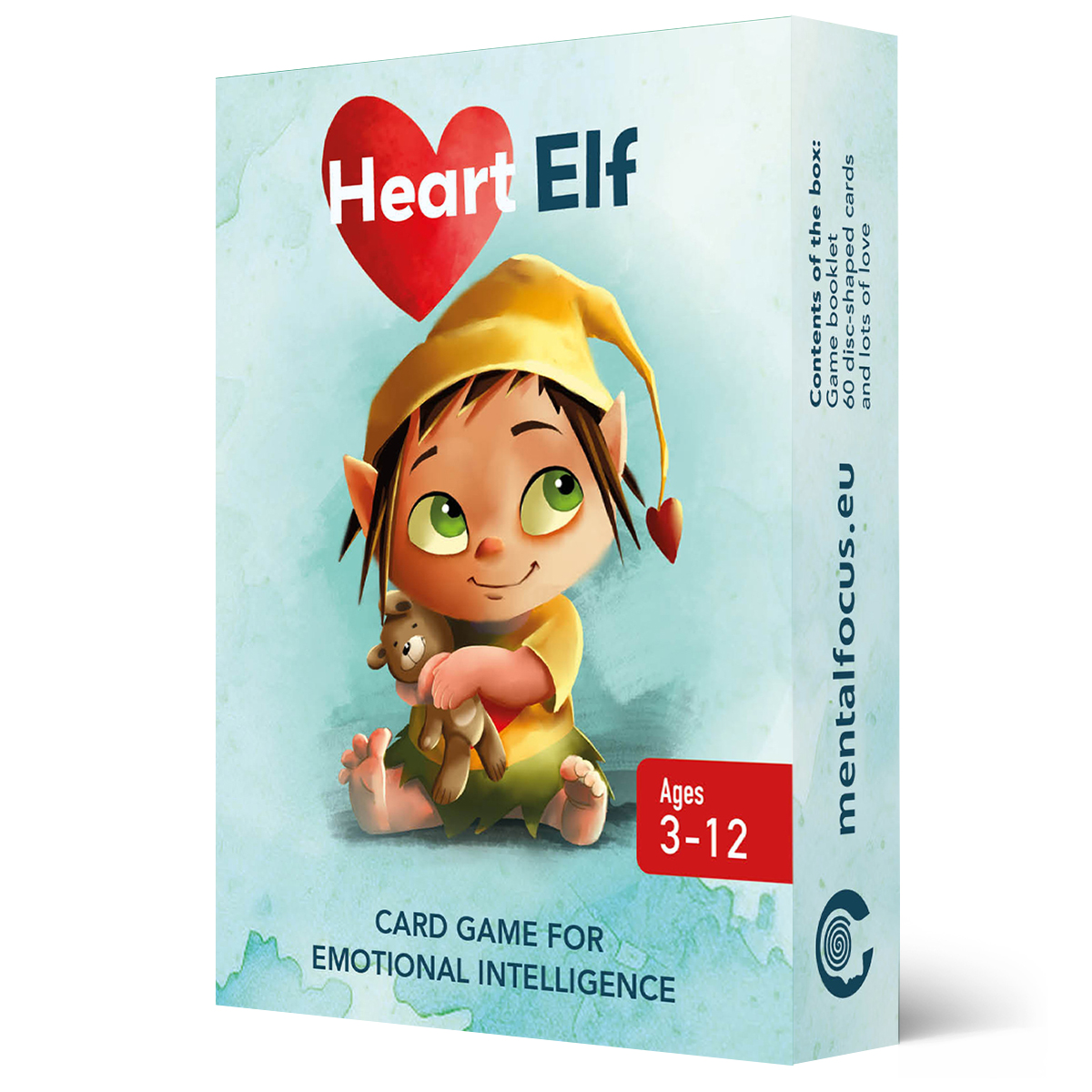
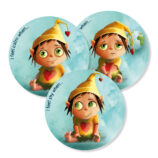
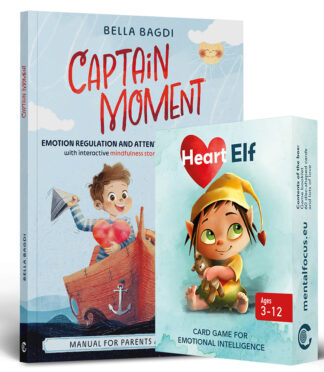
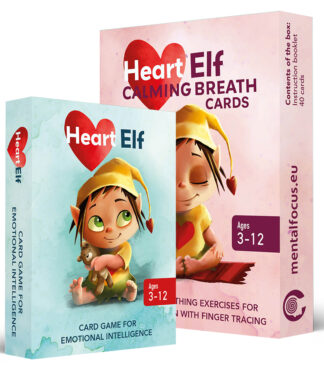
Heart Elf – Card Game For Emotional Intelligence
The Heart Elf Emotional Intelligence Card Game is an excellent tool for children to learn how to express and manage their emotions while respecting the feelings of others. Using the card game helps children to calm down in difficult emotional situations, such as sadness or anger, and is a playful way to learn healthy coping strategies. This helps them to cope better in challenging circumstances, develop social relationships and form deeper friendships.
Why should you play with Heart Elf cards?
Our emotions form the foundation of how we feel and how we respond to the world around us. Children’s behavior is largely influenced by their emotions, as the frontal lobe, responsible for rational thinking, is not yet fully developed. This is why children often react impulsively or struggle with regulating their emotions—causing them to have breakdowns, become frustrated, experience tantrums, or sulk. In addition, many of the conflicts between children also arise due to insufficient emotion regulation.
What can we do?
First and foremost, we can help them by teaching them to recognize and name their emotions, and showing them how to manage them. As children grow older, their emotional world becomes more complex, so it’s best to start teaching these skills as early as possible. Research from recent decades and findings from positive psychology clearly demonstrate the importance of emotional intelligence and emotion regulation for our mental and emotional well-being.
This card game helps children learn these skills in a playful way. Playing a game with emotions at its center helps children recognize, identify, express, and regulate their emotions. Through conversation while playing, you can help your child explore their feelings, which not only aids in the development of emotional intelligence, but also strengthens the connection between you.
During the game, children open up in a safe environment and can engage with emotions in a way that is most accessible to them, enabling them to understand their feelings on a deeper level.
Plus, the game can be played in various ways — with family, in kindergarten or school groups, during holidays, or even at home, just the two of you.
Why is developing emotional intelligence important in childhood?
Emotional Intelligence (EI, also known as EQ) involves the ability to recognize, understand, and manage emotions, as well as the skills of empathy, social relationships, and emotional self-regulation. Here are a few reasons why developing children’s emotional intelligence is especially important:
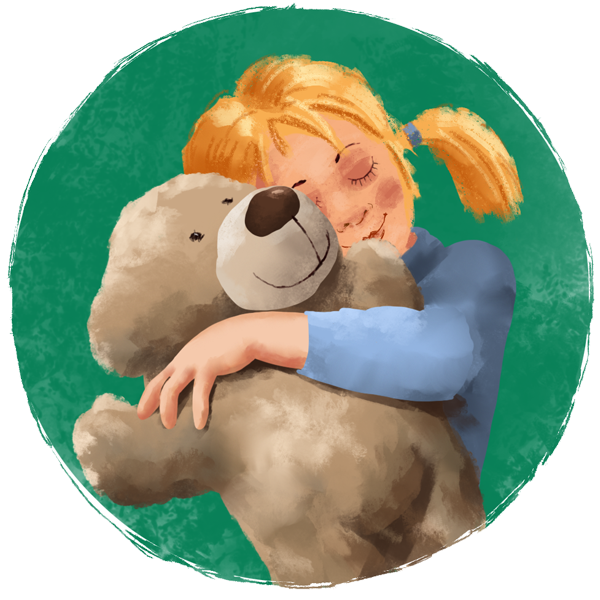
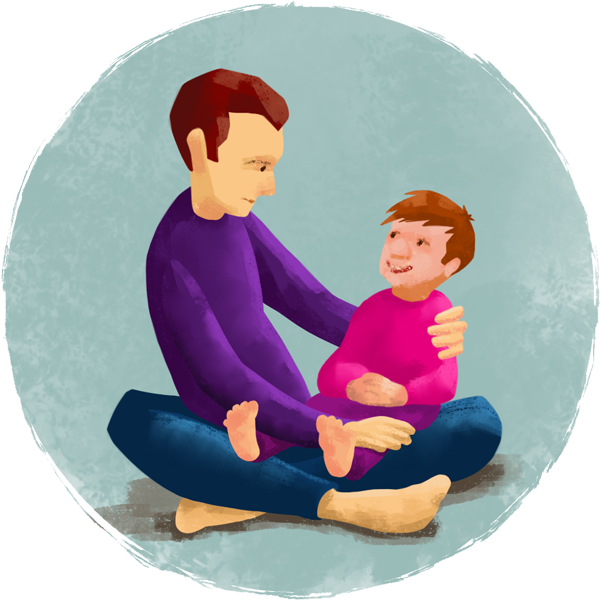

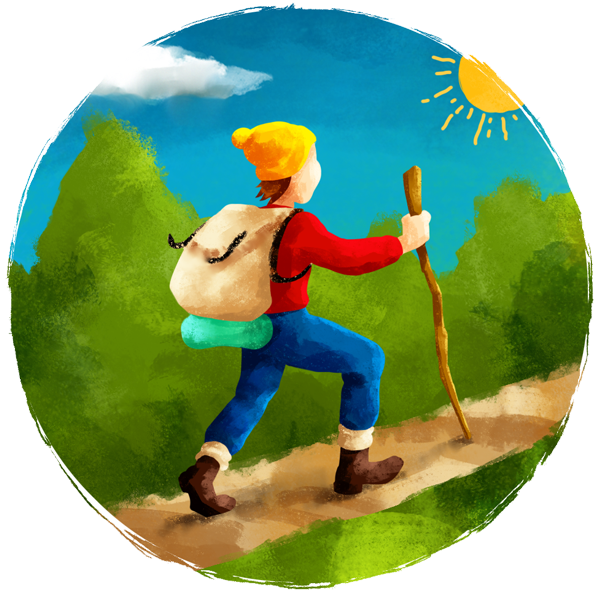
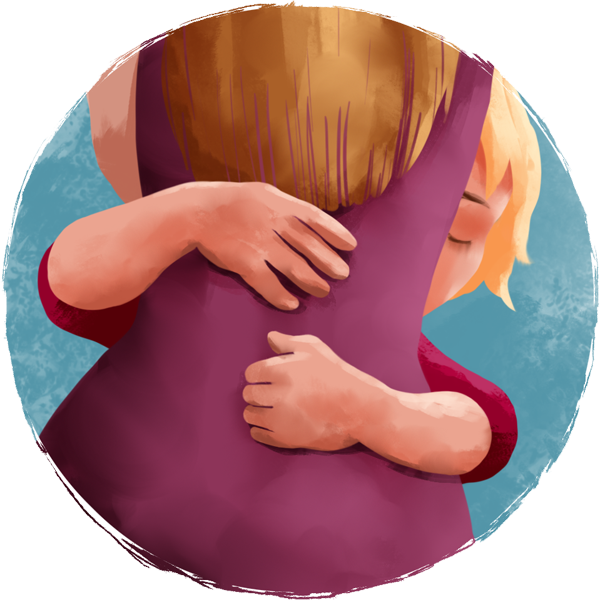
Emotional intelligence not only improves children’s current quality of life, but also has a long-term positive effect on their happiness and success. Parents and educators play a key role in this process, as they provide the support and learning opportunities that help children acquire these vital skills.
With the Heart Elf Cards, learning becomes more engaging and varied, making it exciting and enjoyable for both preschool and school-age children.
Why is the playful method the best for developing emotional intelligence?
Play is a child’s most natural way of learning, which is why playful methods are highly effective for developing emotional intelligence. While traditional learning can sometimes feel dull for children, and many parents find it hard to talk about emotions—often because they haven’t learned how to themselves—a card game like Heart Elf makes it easier for both children and adults to open up.
The game gives children an opportunity to express their emotions freely, whether positive or negative. It helps them understand and manage their feelings. Through playing together, children learn social skills like how to cooperate, share, take turns, and handle conflicts––all of which are important elements of emotional intelligence.
Play-based activities create a safe and supportive space where children can experiment and learn from their mistakes without fear of harsh judgment. During play, children also get the chance to experience others’ emotions, which supports the development of empathy. They learn how others feel, and how to respond appropriately.
While playing, children also learn to control their impulses, follow rules, and think ahead — all of which are essential for emotional self-regulation. Positive feedback during play strengthens their self-confidence and self-esteem, encouraging them to continue developing emotional skills. Creative games and challenges also support the development of problem-solving abilities and creative thinking, both of which are important aspects of emotional intelligence.
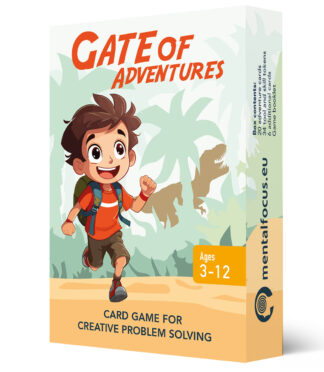
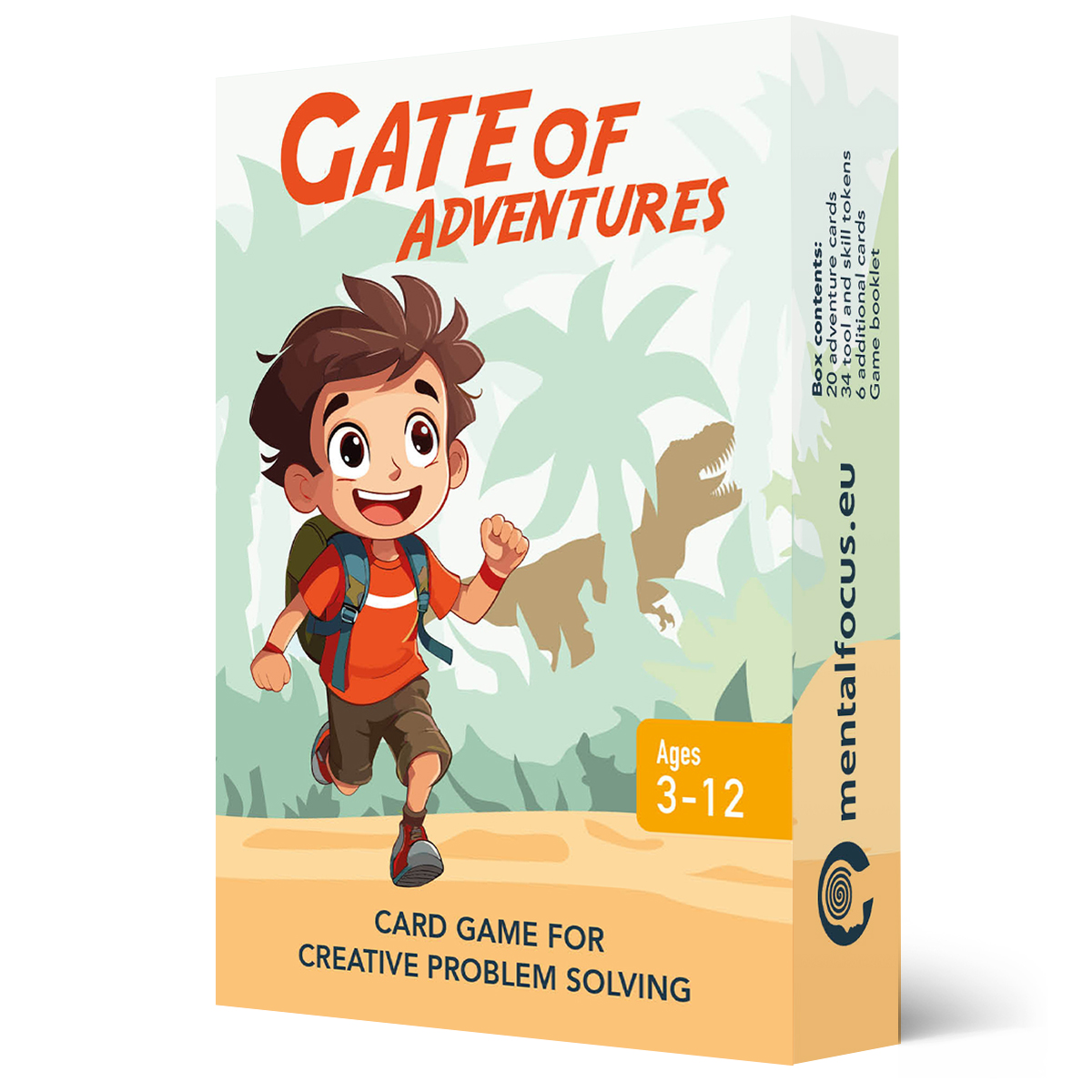
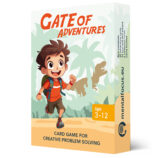
Gate of Adventures – A card game for developing creative problem-solving skills
The Gate of Adventures card game takes your child on exciting and imaginative journeys that build resilience, boost confidence, and strengthen problem-solving abilities, creative thinking, and coping skills, all through the power of play.
How can you help your child become more creative, resourceful, and resilient?
As a parent, you want your child to succeed in life, and to face life’s everyday challenges with confidence and ease. But sometimes they hesitate, or they might be shy, unsure of themselves, or intimidated by bigger tasks, not knowing what to do about them. They may even hold back from things you know they’re capable of doing. So you start to worry about how they will cope later in life.
- How can you help them strengthen their problem-solving skills?
- How can you spark their courage and motivation?
- What can you do to help them feel excited about trying new things?
- How can you support them in finding creative solutions when things get tough?
In fact, the best way to help your child is through something they already love: play. Play isn’t just entertainment; it’s one of the most powerful ways children learn. While playing, they get to test their limits and skills, explore new situations, and act more freely, without the inhibitions that might otherwise hold them back in everyday life.
This is exactly where the Gate of Adventures card game can support you. The cards invite the children into magical adventures where they’ll need to find solutions to fantastical situations. Along the way, they’ll also encounter everyday challenges that call for just as much clever thinking and creativity.
The goal of the game is to strengthen children’s problem-solving abilities and nurture their creative thinking. Through magical quests and real-life challenges, they learn how to solve problems creatively and build effective coping strategies, all while having fun.
Why is it important to develop children’s problem-solving skills?
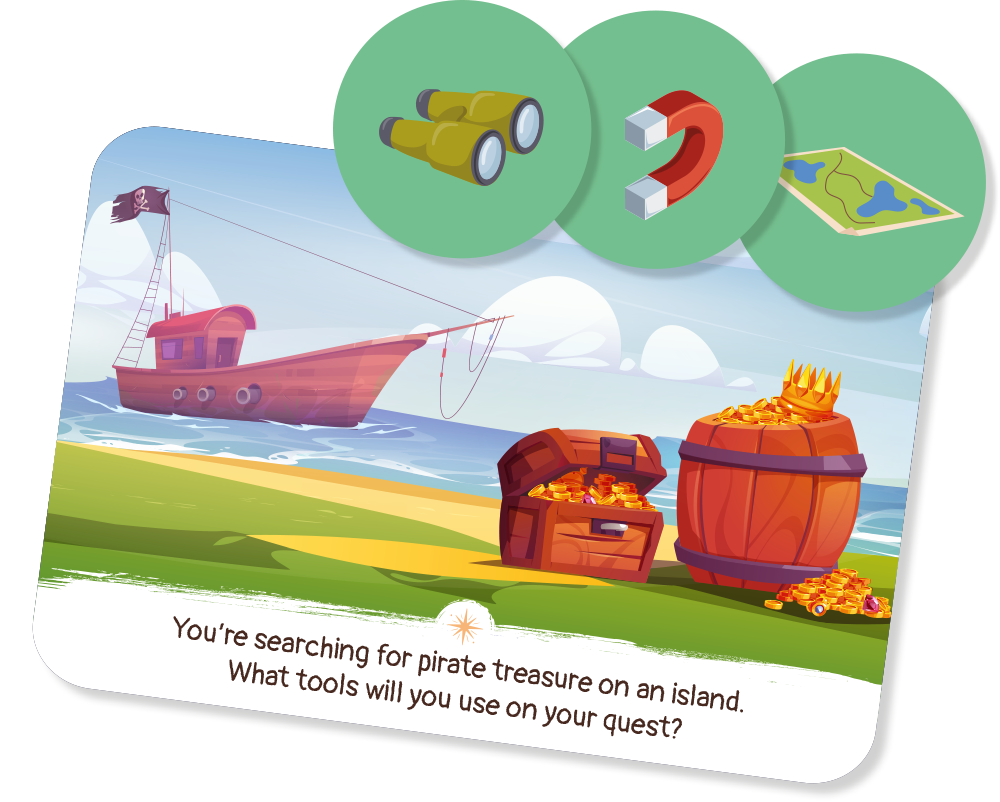
How to play the Gate of Adventures game
The game can be played in two different modes:
In the cooperative game mode, players don’t compete against each other—instead, they work together to go on as many adventures and solve as many challenges as they can. They either win together or lose together. This shared gameplay experience encourages teamwork and cooperation, while offering fun and exciting adventures for even the youngest explorers.
The competitive game mode gives more experienced adventurers a chance to challenge each other. In this version, the winner is the first player to complete all their missions. While competition is part of the gameplay, the focus remains on fun and the joy of playing, so everyone can enjoy the challenges and the adventure.
What ages is the game suitable for?
The game is recommended for children aged 3 to 12, making it a great activity for both younger and older children to enjoy together.
How many players can play the game?
The game can be played by 1 to 6 players at a time, so whether your child wants to play alone or you’re looking for an activity for the whole family or a classroom group, it’s a perfect fit.
How long does the game last?
Each session lasts around 15–20 minutes, making it ideal for busy weekday evenings or for a relaxing break during a trip or outing.
About the author

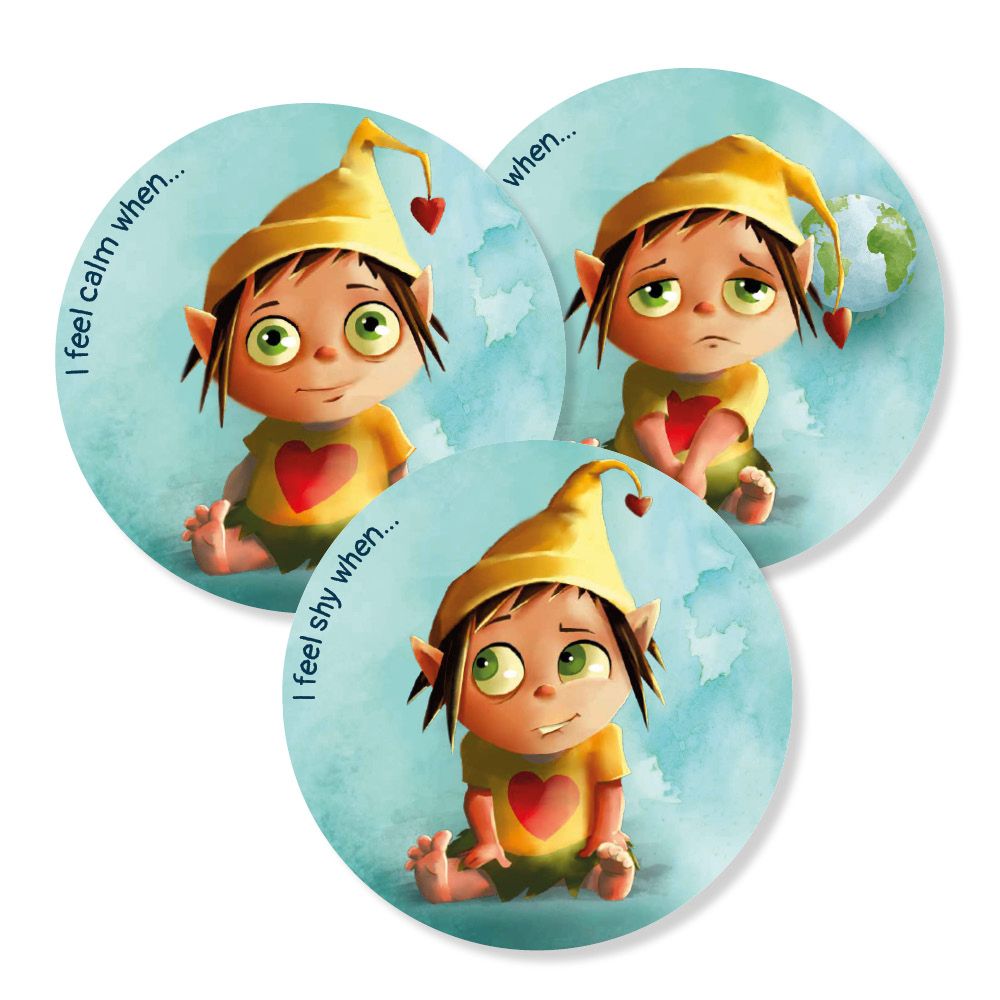
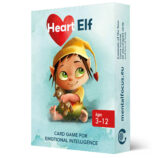
| Heart Elf Card Game | 28 Emotion Cards |
|---|---|
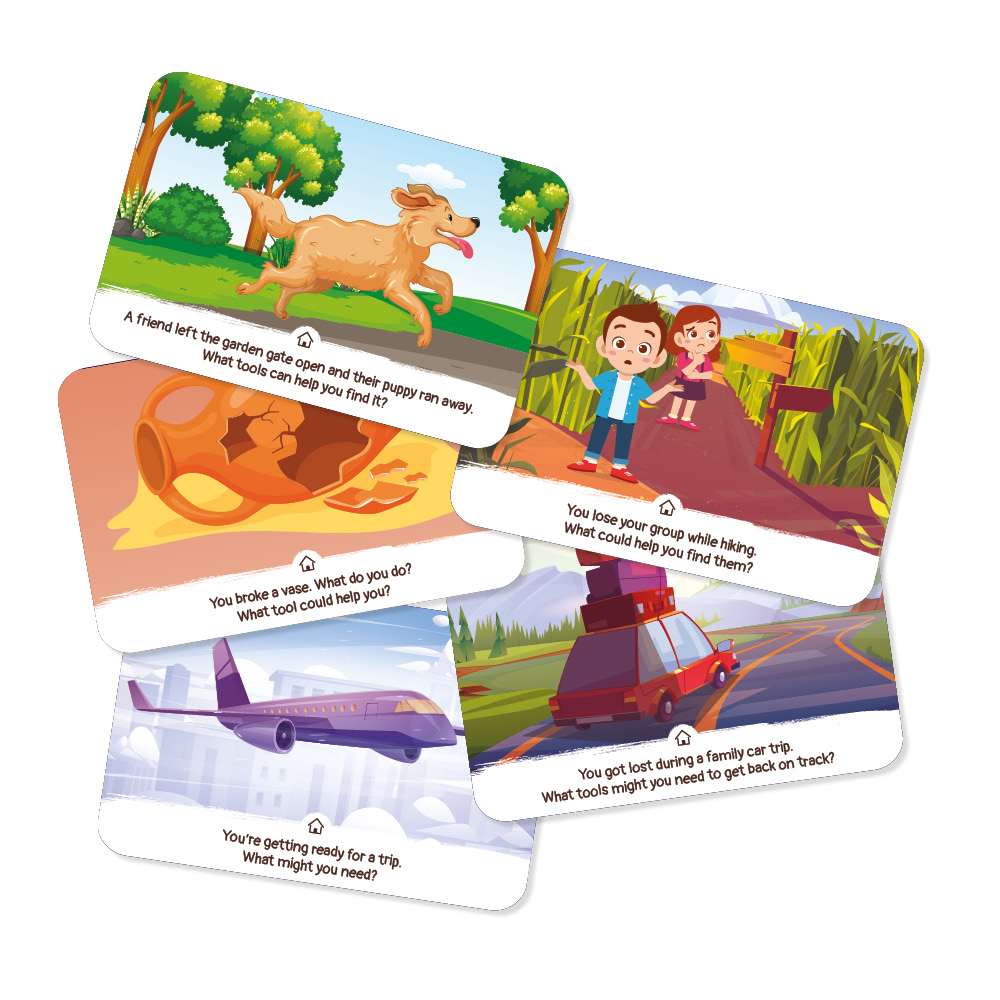
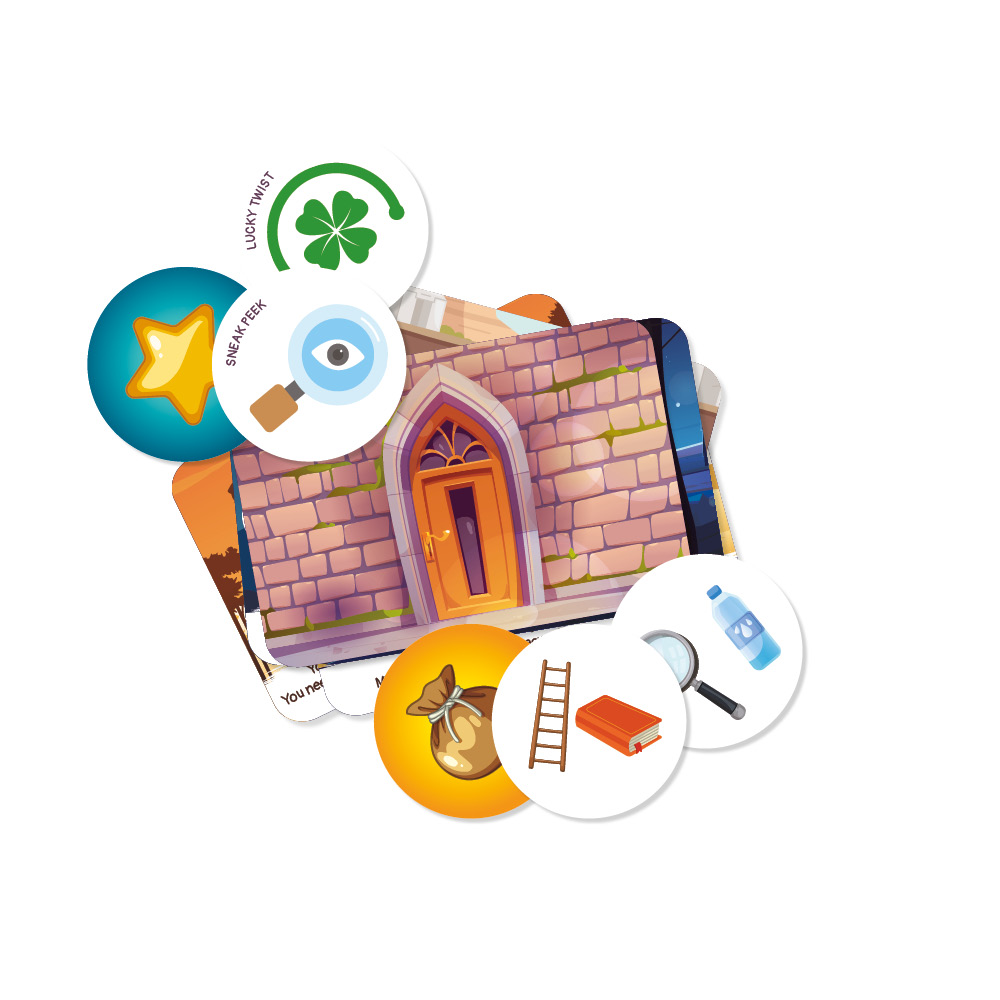
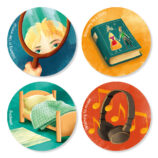
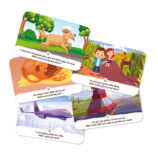
| Gate of Adventures Card Game | 20 Adventure Cards, with a magical quest on one side and an everyday challenge on the other |
Csilla Berencsi-Eke Péter Vermesy Primary School and Elementary School for the Arts, Maglód –
Csilla Berencsi-Eke Péter Vermesy Primary School and Elementary School for the Arts, Maglód
This game really helps children get to know their feelings. They often find it hard to identify their emotions, but Heart Elf’s charming little face makes them more accessible. During the game, several children recognized themselves in the cards, and even the quieter ones were able to connect with their own emotions.
“It’s just really fun to play with.”
“This was the best class ever!”
Csilla Berencsi-Eke
Péter Vermesy Primary School and Elementary School for the Arts, Maglód
Angelika Fenyves Sípos Street Kindergarten, Debrecen –
Angelika Fenyves Sípos Street Kindergarten, Debrecen
The Heart Elf card game sparked a lot of interest among the children. They really loved the artwork and the little illustrations. During group play, they were highly engaged—we sorted emotions into positive and negative, and practiced expressing them through facial expressions and body language. When it came time to talk, the children were eager to share their own feelings—surprisingly, they were most open about the negative ones.
This was yet another confirmation of just how timely and important emotional intelligence development is.
I wholeheartedly recommend the Heart Elf card game to both teachers and parents. It offers a wonderful opportunity to support children’s personal development—especially when it comes to building emotional intelligence. It’s an incredibly effective tool for helping children identify, differentiate, and express their emotions in a playful, effortless way.
Angelika Fenyves
Sípos Street Kindergarten, Debrecen
Andrea Tóth –
Andrea Tóth
“Mom, you know I hate card games!” — That was her first reaction.
But little by little, we got completely drawn into this fantastic, conversation-sparking game.
I’ve always known my daughter has incredible communication skills, but the way she expressed every single emotion as we played was just amazing. The only tricky moment came at the end, when we had to stop and go take a bath!
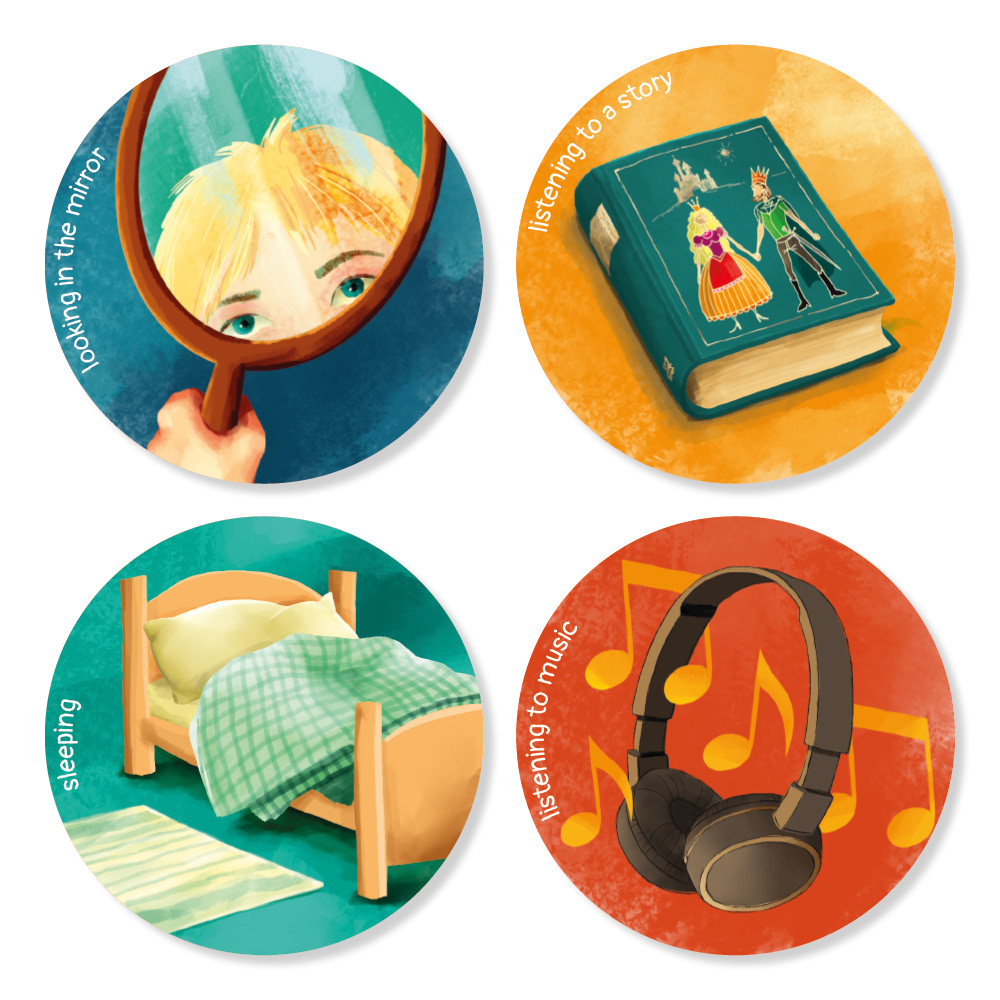
The illustrations are adorable, the concept is brilliant, and I love that the cards are round!
Andrea Tóth
Mrs. Dombi István Bocskai Primary School of Derecske –
Mrs. Dombi István Bocskai Primary School of Derecske
As someone with decades of experience as a teacher, I’ve been trying to figure out why children today often struggle to express themselves. There are several reasons for this, but one of the most significant is what I call “silence at home.” Sadly, this is a major barrier to developing expressive skills. Parents who are overwhelmed with work want peace and quiet in the evenings. The children come home tired, too, but they would like to talk, to share the big events and small troubles of their day, but their mom and dad hush them. Not out of disinterest, but because they themselves are burdened with problems.
Language is our most important tool for thinking and connecting with others. Without it, community life becomes impossible. In the classroom, the teacher—regardless of the subject they teach—is a key figure. Their personality has a unique influence that cannot be replaced by anything else. Their role is to nurture in children the ability to express their thoughts and feelings, both in speech and writing.
One solution is to talk with children more—and The Gate of Adventures card game is a fantastic playful tool to do just that. It helps build creative problem-solving and coping skills through magical adventures. The everyday scenarios in the game encourage a kind of bravery in life that supports the development of effective coping strategies. Even the “silent ones” at home start speaking up, bursting with clever ideas.
It was truly heartwarming to see and hear how they found solutions to even the trickiest situations using the item tokens. They loved the skill tokens, and as a team, they filled their success albums together. The game got even more exciting when we flipped the item tokens face-down and asked them to recall and turn over one from memory. The hilarious ideas they came up with had us all laughing.
Mrs. Dombi
István Bocskai Primary School of Derecske
Mrs. Andrea Fervágner Sándor Nefelejcs Preschool for the Arts, Csömör –
Mrs. Andrea Fervágner Sándor Nefelejcs Preschool for the Arts, Csömör
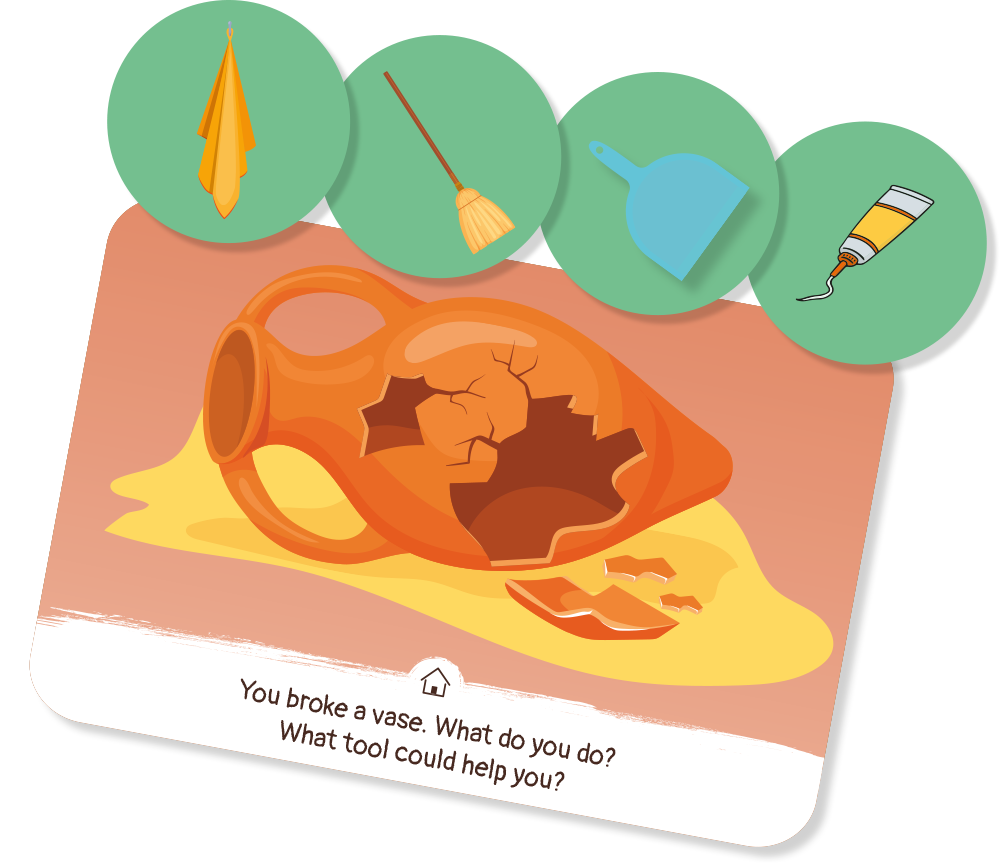
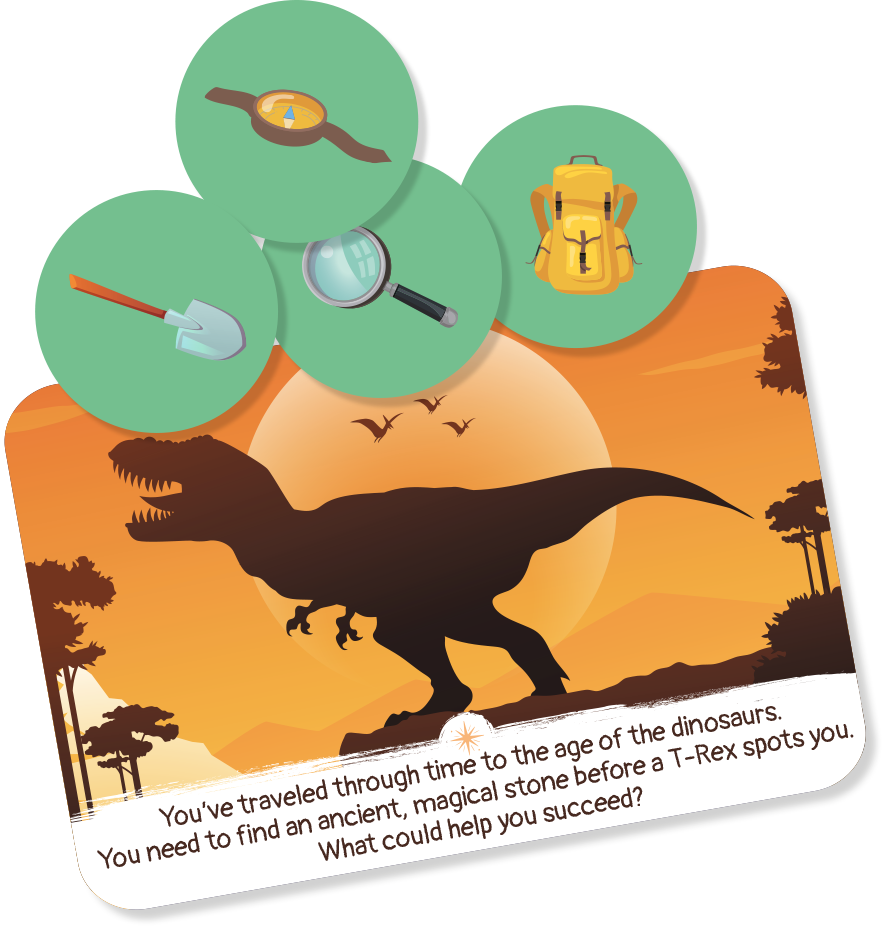
Another beautifully designed card game from Mental Focus—one that doesn’t require any extra motivation, because as soon as the children saw the illustration, they rushed to the table. They could hardly wait for me to open the box. We unpacked the decks together, which include round and rectangular cards. They love that the Story Cards are double-sided, and they can choose which side I read. One side features a real-life problem, the other a fairytale scenario. Since they’re preschoolers, they naturally prefer the magical illustrations. They are a little exciting, a little mysterious, and give space for imagination, and of course, unleash incredible energy in the children, because now they get to be the superheroes.
At first, we searched freely through the cards for solutions, but then we added a challenge and only allowed them to use the top card. They quickly discovered that even everyday objects can be used in many surprising ways. There was joy, laughter, playful brainstorming, a bit of silliness, a touch of seriousness—all kinds of emotions came into play. One quiet child from the middle age group threw themselves into the game and competed enthusiastically with the older ones during the brainstorming rounds.
The card game offers so many possibilities. It’s cheerful, visually appealing, and filled with familiar situations and objects. It builds on what the children already know, develops creative thinking, expands their knowledge, grows their vocabulary, and strengthens expressive skills. Solving the challenges really gets everyone thinking and strengthens group cohesion and cooperation.
It never really ends. You can stop anytime, but it could go on forever. I wholeheartedly recommend it to everyone!
Mrs. Andrea Fervágner Sándor
Nefelejcs Preschool for the Arts, Csömör